

Sent In Grey
Gandalf, the Istari, and the deeper music of true power

(Cover image by Will Shrike)
Welcome to Pt3 of our series on The Istari and Pt1 of our series on Gandalf.
The Mystery of the One in Grey
I thought Gandalf would be the easiest of the Istari to write about but it turns out he has been the hardest. He is too familiar. We know the old man at the door, the pipe-smoke, the fireworks, the sudden laughter, the long eyebrows, the road-worn cloak, the staff, the sharp eyes under the battered hat. Gandalf feels like part of the furniture of Middle-earth, as though he has always been there, arriving “precisely when he means to.”1
But his familiarity can hide his greatness. Pippin captures this perfectly in Minas Tirith when Beregond asks whether he knows Mithrandir well. Pippin has known of Gandalf all his short life, and lately had travelled far with him, yet even he admits that “there is much to read in that book,” and he has only seen “a page or two.” 2Gandalf is near, familiar, beloved, and still far deeper than those around him can easily understand.
So I found myself needing to look first at the failures around him.
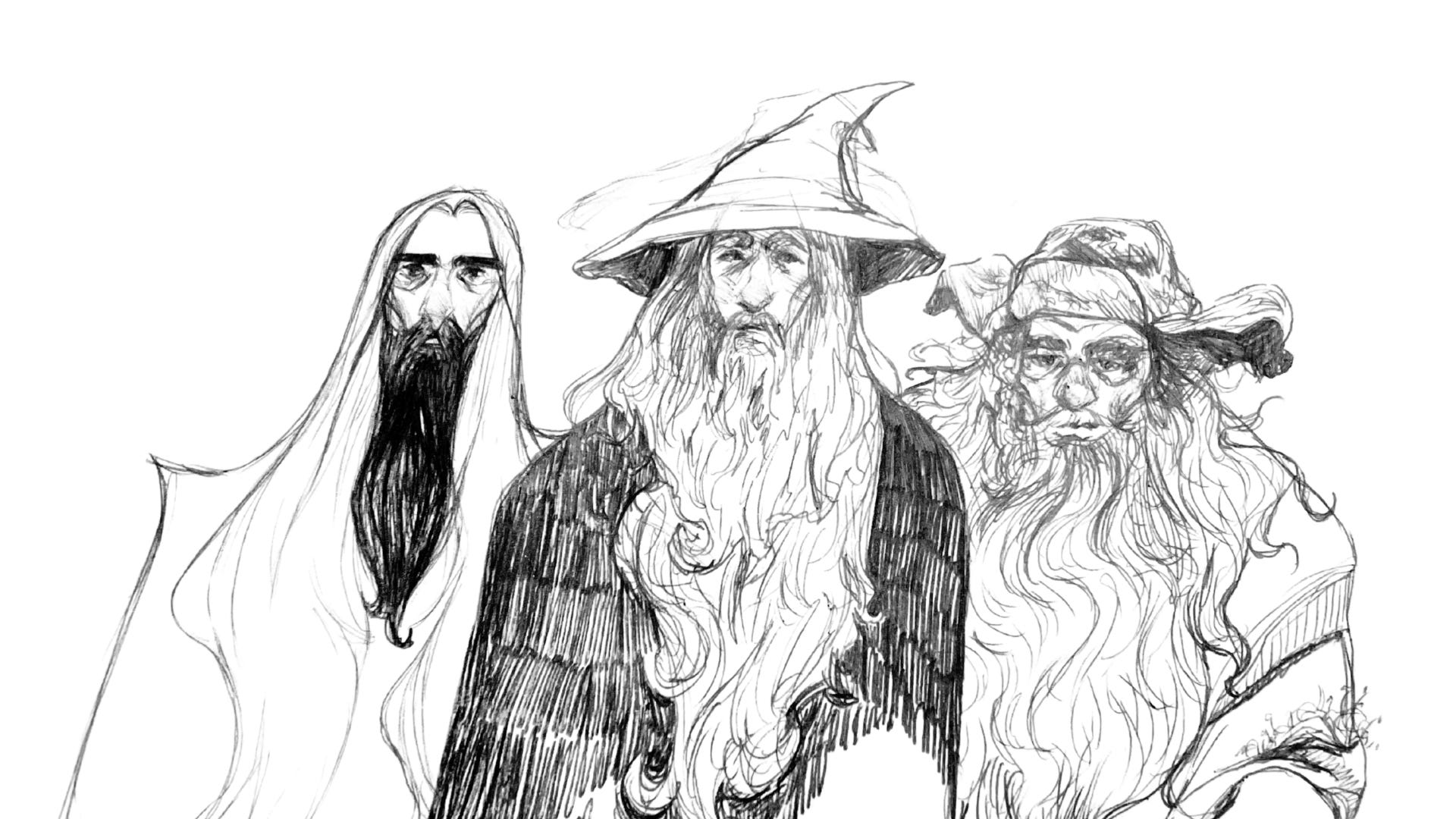
The Istari wizards were sent under a very specific discipline: no open displays of power, no ruling the wills of Elves or Men, weakness and humility in form, persuade towards the good, and cultivate unity in love against Sauron’s corruption.3
Saruman showed us what happens when wisdom begins to serve ambition. He had learning, skill, voice, influence, and power, but he came to believe that Sauron could only be resisted by mastering Sauron’s methods. The servant of the West began reaching for the tools of the Dark Lord: machinery, command, calculation, and power taken into his own hands.
Radagast failed in a much quieter way. He loved the living world, and that love was not evil. It’s important to note that Tolkien never treats birds and beasts as disposable, and creation is never just scenery, but Radagast’s love narrowed. A true good became too small for the whole burden of his calling, and the care of creatures became a shelter from the greater struggle unfolding among Elves and Men.
And so now we can return to our beloved Gandalf.
Gandalf is not merely the wise old guide. He is the Istar who remains faithful to the shape of the mission, and in doing so he mentors the very men and hobbits through whom the West is restored and preserved. Aragorn, Faramir, Bilbo, and Frodo are not formed by him in the exact same way, but each is strengthened by his presence in their life. In a way, we owe Gandalf for each one of them.
I think this is why he matters so deeply to me and for those of us who aspire to become Men of the West.
Gandalf is a maker of the Men of the West.
But before we can understand what he does in Middle-earth, we have to understand the form in which he comes.
Gandalf Is Sent In Grey
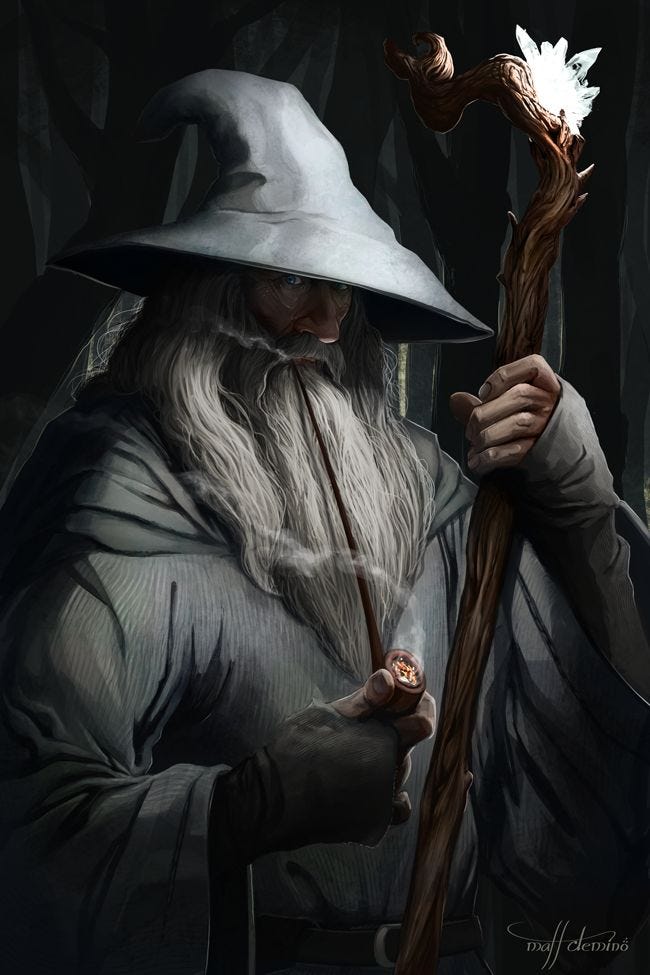
Before Gandalf counsels kings, confronts the Balrog, exposes Saruman, or stands against the terror of Mordor, the shape of his obedience is already visible in the way he comes. He arrives aged, weathered, road-worn, grey-haired and grey-clad, leaning on a staff.
No open displays of power or majesty.
That is the first line of the Istari Rule, and it raises the question we have to follow backward: why would Tolkien send one of the wisest and greatest spirits in Middle-earth into the story in grey?
To answer that, we have to go back before Gandalf, before Sauron, before the Ring, before even the making of the world.
We have to begin with Eru Ilúvatar, the One Father of All, and the Music of the Ainur.

The Music Beneath the World
Before Tolkien gives us Middle-earth as a map, he gives it to us as music.
In The Silmarillion, Tolkien’s account of the ancient history of Middle-earth, the beginning of all things is called the Ainulindalë, the Music of the Ainur.4
Eru Ilúvatar brings the Ainur into being. They are the great angelic powers, created before the world itself, and he gives them a theme to sing. At its source in Eru, power is not domination. It looks more like creative generosity. Eru gives the theme, but he does not flatten the voices of the Ainur into his own. He gives them a part because his sovereignty is not weakened by the freedom of their voices. His power is not anxious or competitive.
Melkor’s power moves in another direction almost from the beginning.
He is the greatest of the Ainur, but his greatness bends inward. He begins to weave his own thoughts into the Music, not as a faithful deepening of Eru’s theme, but as a rival sound. He wants to increase the power and glory of the part assigned to himself. The music around him becomes louder, harsher, more violent. It spreads by pressure. Some voices falter, some are drawn into his discord, and others stop singing altogether.
Eru does not answer as though Melkor has become his equal. He stands and brings forth another theme. When Melkor’s discord grows louder, Eru stands again and brings forth a third theme, softer and deeper than the others, woven with sorrow, yet impossible to defeat. Melkor’s sound rages against it. For a time, his music seems stronger because it is more obvious: louder, harsher, more forceful, and overwhelming. But the deeper theme does not vanish beneath it. It takes sorrow into itself and becomes more beautiful through what it bears.
Then Eru stands once more and brings the Music to a single great chord.
Only after the song ends does he reveal its meaning. No theme can be played that does not have its deepest source in him. No rebellion can finally alter his design. Even the one who tries to distort the Music will become the unwilling instrument of things more wonderful than he intended.
The song then becomes a world.
Eru shows the Ainur a vision of what they have sung and then he gives it being. History unfolds within its shape. The Ainur who enter that history become the Valar, the great Powers of the world, and they will come to learn that the Music of Eru is deeper than their own visible glory.5
The Cost of Open Power
When the Music becomes history, Melkor’s discord takes form inside the world itself.
The Valar enter that history in glory, beauty, and power. Their visible majesty is not prideful or false; it belongs to what they are. Melkor also takes physical form, but in him strength becomes horror, and his outward appearance begins to reveal the disorder already alive within him.
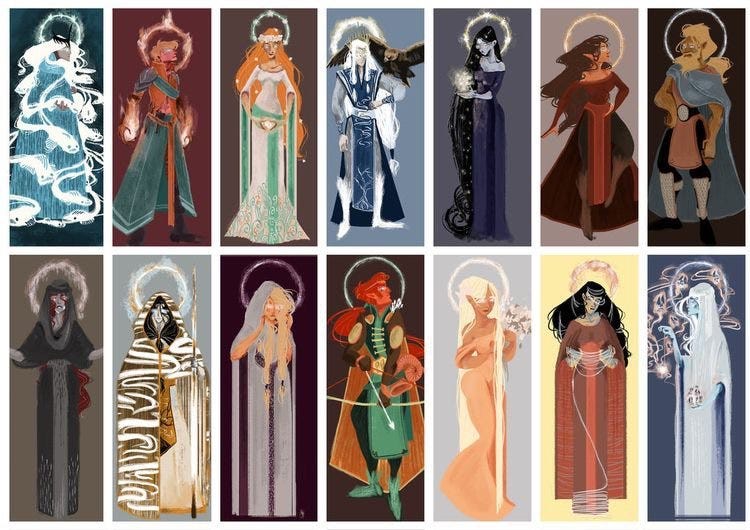
At first, the labour of the Valar is not war, but making. They shape the world, order its lands and waters, prepare its lights, and labour to make Arda habitable for the Children still to come. Their power is wonderful and righteous, bringing form and beauty into a world prepared for life.
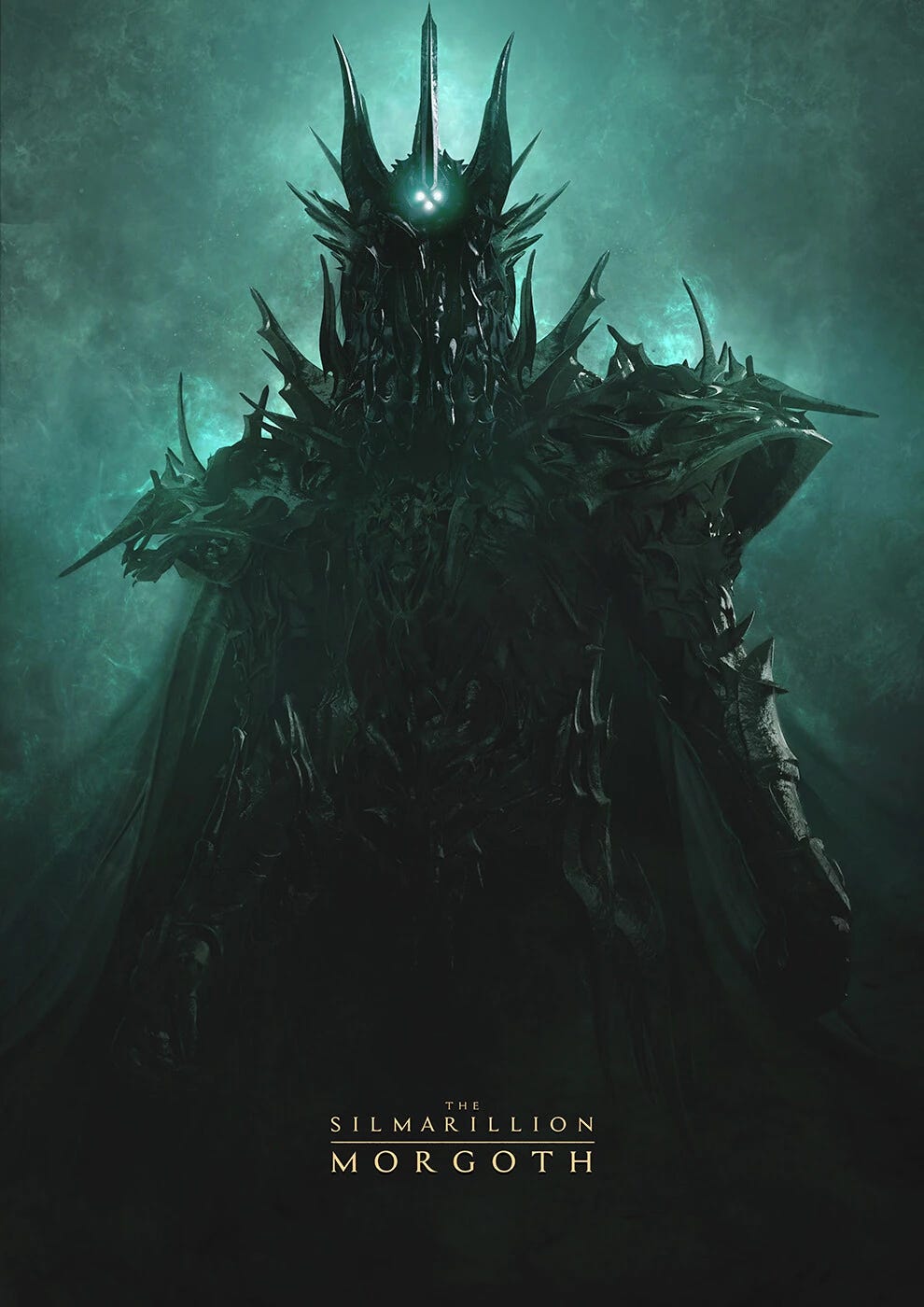
Melkor (later named Morgoth) moves against all of this. He does not make a truer world; he mars the one given by Eru. What the Valar shape, he breaks. What they order, he distorts. What they prepare for life, he seeks to master through fear and ruin. So the conflict becomes a long war.6
Across the ages before The Lord of the Rings, the Valar battle Melkor with the great strength of the West. That strength is good and righteous. Melkor’s violence has to be resisted, his tyranny has to be cast down, and in the end he is defeated.7
But the victory wounds the world.
The force required to overthrow him breaks much of what it saves. At the end of the First Age, the war against Morgoth shatters Beleriand, the great Elven western lands of that age, and leaves much of it drowned beneath the sea. The West prevails, but the map itself carries the cost.
Here the deeper theme of Eru’s Music begins to press on the history of the Valar. Strength against strength can overthrow the tyrant, but it does not yet reveal the deepest wisdom of the Music. The Children of Ilúvatar are already present in the struggle, and even call the Powers to act, but the victory still comes in the visible register of overwhelming strength from the West. Morgoth is cast down, yet the world is left broken, and Sauron remains to gather the old will to dominate into a new darkness.
Sauron will still have to be resisted. The Last Alliance will march against him, and the War of the Ring will require swords, kings, captains, soldiers, and the courage of ordinary folk.8 Tolkien is not imagining goodness without strength, but the Valar themselves will no longer stand as the visible centre of deliverance. When the West sends help in the Third Age, it comes under restraint, not to replace the courage of Middle-earth, but to strengthen it from within.
Tolkien gives us a small but important window into the council of the Valar as this decision is made:
“…summoned it seems by Manwë… at which it was resolved to send out three emissaries to Middle-earth. ‘Who would go? For they must be mighty, peers of Sauron, but must forgo might, and clothe themselves in flesh so as to treat on equality and win the trust of Elves and Men.
But this would imperil them, dimming their wisdom and knowledge, and confusing them with fears, cares, and wearinesses coming from the flesh. But two only came forward: Curumo, who was chosen by Aulë, and Alatar, who was sent by Oromë. Then Manwë asked, where was Olórin? And Olórin, who was clad in grey, and having just entered from a journey had seated himself at the edge of the council, asked what Manwë would have of him. Manwë replied that he wished Olórin to go as the third messenger to Middle-earth… But Olórin declared that he was too weak for such a task, and that he feared Sauron. Then Manwë said that that was all the more reason why he should go, and that he commanded Olórin…”
— Unfinished Tales, “The Istari”9
The Third Theme
The council of the Valar shows the Powers learning how to serve the deeper theme.
The Powers of the West are not abandoning strength. Sauron is not less dangerous than Melkor had been, and Tolkien is not imagining a world where evil can be answered by gentle wishes. The emissaries must be “mighty, peers of Sauron.” They must have real strength, real wisdom, and real authority.
But they must forgo might.
That phrase carries the weight of the whole mission. The Istari are clothed in bodies that can hunger, tire, fear, suffer, and be slain. Their weakness is not an obstacle added to their task, it is the form their task must take.
The deeper theme of Eru’s Music had not answered Melkor by becoming a louder version of Melkor’s noise. It was softer, sorrow-bearing, and impossible to overcome. Now that same pattern begins to appear in the sending of the Istari. Their strength must enter Middle-earth under the conditions of Middle-earth. Their authority must come hidden beneath the long humility of the road.
So the first line of the rule is not incidental:
No open displays of power or majesty.
The servants of the West must not make their own revealed greatness the centre of the story. They are sent to serve the Music of Eru as it unfolds in history, not to replace it with a brighter display of power from above.
If this is the shape of the mission, then the fitting messenger will not be the one most eager to appear mighty.
Tolkien gives us that figure in Olórin.
Or as we know him, Gandalf the Grey.
Olórin Before Gandalf
In the council of the Valar, the question is asked: who will go?
Curumo, whom we later know as Saruman, comes forward. This is worth noticing. Saruman wants the mission. He is capable, brilliant, and already desiring the place of leadership.
Then Manwë asks for Olórin specifically.
Manwë is the chief of the Valar, the highest of the Powers under Eru, and the one most closely attuned to Eru’s mind.
Olórin is not waiting at the centre. He has just returned from a journey and taken his seat at the edge of the gathering, already clad in grey.
When Manwë says he wishes him to go, Olórin actually resists. He says he is too weak for such a task, and that he fears Sauron. I do not read that fear as cowardice. It sounds more like true wisdom. Sauron is not merely an enemy to be outmatched; he is a spiritual danger, and to meet him in the wrong spirit is already to become vulnerable to his corruption.
Manwë does not correct the fear as though it were unworthy. He names it as part of the reason Olórin must go, and then commands him to. So the mission that will one day bring Gandalf to Middle-earth begins without self-appointment or display. He receives the burden under command, in fear, in weakness, and already grey.
When the Istari finally arrive, this same pattern holds. Saruman comes first, noble in bearing, fair-voiced, clothed in white, skilled in works of hand, and regarded by almost all as the head of the Order. Gandalf comes last, seeming least (even behind Radagast), more aged in appearance, grey-haired and grey-clad, leaning on a staff. From the first meeting of Gandalf and the Elves at the Grey Havens, they discern in him “the greatest spirit and the wisest.” The one who seemed least is the one most deeply attuned to the mission and the song. Most deeply in tune with goodness.
The Long Obedience of Grey
As we know, Gandalf does not only arrive in grey. He remains grey.10
That may be the harder obedience. A first act of humility can still become the beginning of a story about ourselves, but Gandalf’s restraint stretches across long years of roads, councils, warnings, laughter, anger, weariness, and care. He lives among the great and the small without making their callings depend on him.
That is how he fulfills the rest of the Istari mission. He can advise and persuade because he does not need to dominate. He can strengthen others because he does not need their strength to gather around him. He can unite free peoples because he does not require their freedom to bow beneath the weight of his own greatness.
We see this in the way he makes the Men of the West. Gandalf does not take Aragorn’s throne, he does not carry Frodo’s burden, and he does not make the courage of hobbits unnecessary. He stands near the centre of the story again and again, yet somehow refuses to become the story’s centre.
When his power does break through, it is never mere display. At the Bridge of Khazad-dûm11, in Théoden’s hall12, and before the shadows of Mordor,13 Gandalf reveals strength because faithfulness requires it. Grey is not the refusal to act. It is the refusal to exploit action for self-revelation.
The Elve’s discernment of Gandalf proves true over the long road. The greatest spirit and the wisest is not the one whose greatness is most easily seen, but the one who can carry greatness without making greatness the point.
Sent in Grey
This is where Gandalf has become most helpful to me.
There is a large part of us that really is not confused about whether strength is good. We know it is good. We want to be strong. We want to be capable. We want to be respected. We want to be the kind of men our wives, children, friends, churches, and communities can depend on.
That is a good desire.
We should care for our bodies. We should grow in discipline. We should become more competent, more courageous, more dependable, more able to carry what has been entrusted to us.
But there is a turn that can happen in our hearts.
Strength stops being utilized as a gift for service and becomes a project of self-affirmation. We begin to need our strength to be seen. We want it recognized by others, reflected in the mirror, proven in our work, confirmed by our children, respected by other men. The good desire to become dependable can get all tangled up with the deeper need to appear impressive.
That is when we begin to hear and attune to Melkor’s music again.
It is louder. It is easier to notice. It promises that if we can become strong enough, visible enough, admired enough, untouchable enough, then we will finally be secure.
But Gandalf showcases a truer expression of strength. One more divine and natural.
He is not weak. He is not passive. He is not afraid to speak, act, rebuke, confront, or sacrifice. Yet his strength is not arranged around the need to appear strong. He can stand near the centre of the story because the cause of goodness is so authentic to him while never needing the story to become about him. To tell him who he is.
It’s here that Gandalf so wonderfully points beyond himself.
Gandalf is not Christ, and Tolkien was right to resist any simple allegory. But Gandalf helps us see a form of power that Christ reveals in fullness. In Jesus, the deepest song takes flesh.
The eternal Son does not come among us grasping after the outward signs of power. He is born in lowliness. He grows up in obscurity. He enters hunger, weariness, temptation, sorrow, rejection, pain, and death. When his divine power is revealed, it is not used to magnify himself. The sick are healed. The hungry are fed. Sinners are forgiven. The possessed are delivered. The weary are restored. When glory does break through, it comes as mercy.
Even then, Jesus refuses spectacle. He withdraws when the crowds would make him king by force. In the wilderness, he will not turn stones to bread to prove himself, throw himself from the temple to compel wonder, or bow for the kingdoms of the world. He will not turn his Father’s mission into a performance of power.
The world looks at the cross and sees defeat, exposure, shame, and powerlessness. The apostles look again and call Christ crucified “the power of God and the wisdom of God” (1 Cor 1:24).
Jesus is the deeper song.
Lowly and unconquerable. Sorrow-bearing and victorious. The glory of God veiled in love.
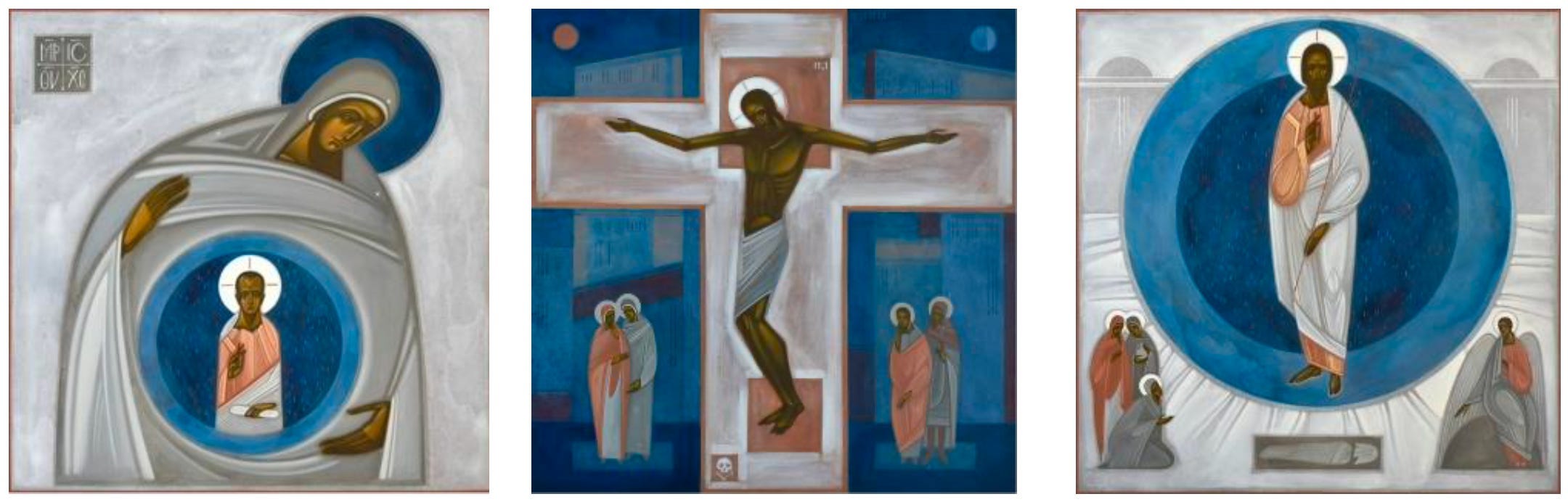
So perhaps this is where our exploration of Gandalf should leave us for now: not simply admiring the image of grey strength, but letting Christ uncover what our hearts have become attuned to.
Some part of us may truly want to serve, protect, build, and become dependable. That desire is good. But another part may still be listening for applause, recognition, respect, or proof that our strength is visible enough to count. We need to learn the difference. Where do we need to be seen as capable before we feel secure? Where do we resent the hiddenness of faithful work? Where has responsibility become a way of proving our necessity? Where are we calling something leadership when it has drifted into image management?
Those questions deserve more space than I can give them here, and I want to take them up in some formational conversations but for now, Gandalf gives us the image: sent from the West, but not as the West unveiled; mighty, but grey; strong enough to stand against evil, yet free enough not to make his strength the centre of the story.
In that grey strength, we begin to glimpse the deeper song that Christ alone fulfills.

J.R.R. Tolkien, The Fellowship of the Ring, Book I, Chapter 1, “A Long-expected Party.”
J.R.R. Tolkien, The Return of the King, Book V, Chapter 1, “Minas Tirith.”
J.R.R. Tolkien, Unfinished Tales, “The Istari.”
J.R.R. Tolkien, The Silmarillion, “Ainulindalë.”
J.R.R. Tolkien, The Silmarillion, “Of the Beginning of Days.”
J.R.R. Tolkien, The Silmarillion, “Of the Coming of the Elves and the Captivity of Melkor.”
J.R.R. Tolkien, The Silmarillion, “Of the Voyage of Eärendil and the War of Wrath.”
J.R.R. Tolkien, The Silmarillion, “Akallabêth.”
J.R.R. Tolkien, Unfinished Tales, “The Istari.”
Until his final act as Gandalf the White
J.R.R. Tolkien, The Fellowship of the Ring, Book II, Chapter 5, “The Bridge of Khazad-dûm.”
J.R.R. Tolkien, The Two Towers, Book III, Chapter 6, “The King of the Golden Hall.”
J.R.R. Tolkien, The Return of the King, Book V, Chapter 4, “The Siege of Gondor.”
Excellent piece. You've gained a subscriber. I was in the Golden Age of Boyhood at 12 years old when The Fellowship of the Ring came out and, of course, I fell in love with all things Middle Earth. As I grew up into High School I remembered that Gandalf was not only strong and wise but friendly with a love that showed little partiality. Gandalf would be advising a King or an Elf Lord one moment and the next he'd be lighting fireworks and drinking ale with Hobbits. This made me think of the different clicks in school - the jocks, nerds, gamers, preppys, gear heads, drama kids, and outcasts - and how, in a way, I could be like the Grey Pilgrim with the kind of love and warmth that can befriend any of those groups for the common good yet not being so identified with any one of them that would threaten my ability to associate with any other.
Anyways, looking forward to reading more articles new and old!
Good stuff here brother. The Lord has been dealing with on the very topic being meek and self-controlled. This article very much helped me to understand something’s about myself. Keep up the good work!