
Why Men Lose Their Way, and How Tolkien Points Us Back
A reflection on Aragorn, faith, and the quiet strength required to remember what is good.

Two Kinds of Men
In earlier essays I have written about two very different men in Tolkien’s legendarium.
One is Aragorn.
The other is Túrin.
Tolkien tells the story of Túrin as a warning. He is brave, fierce, and passionate. He possesses many of the qualities we often admire in men like strength, courage, and defiance. Yet his life unfolds as a tragic cycle of masculine self‑destruction. Again and again Túrin attempts to force the world into submission through his will. Again and again his strength turns inward, harming those he loves and ultimately destroying himself.
Tolkien once said that the story of Túrin is one of the darkest in all his legendarium, and it is not difficult to see why. Túrin represents a pattern that repeats throughout history and across cultures: the man who is strong but unformed, courageous but unintegrated, passionate but unable to master his own desires.
I explored this warning in earlier essays such as Tolkien’s Ancient Warning to Every Man and The Dragon in the Minds of Men. In those stories Tolkien shows the destructive pattern that emerges when masculine strength becomes untethered from humility, memory, and restraint.
But Tolkien does not leave us only with the tragedy of Túrin.
He also gives us Aragorn.
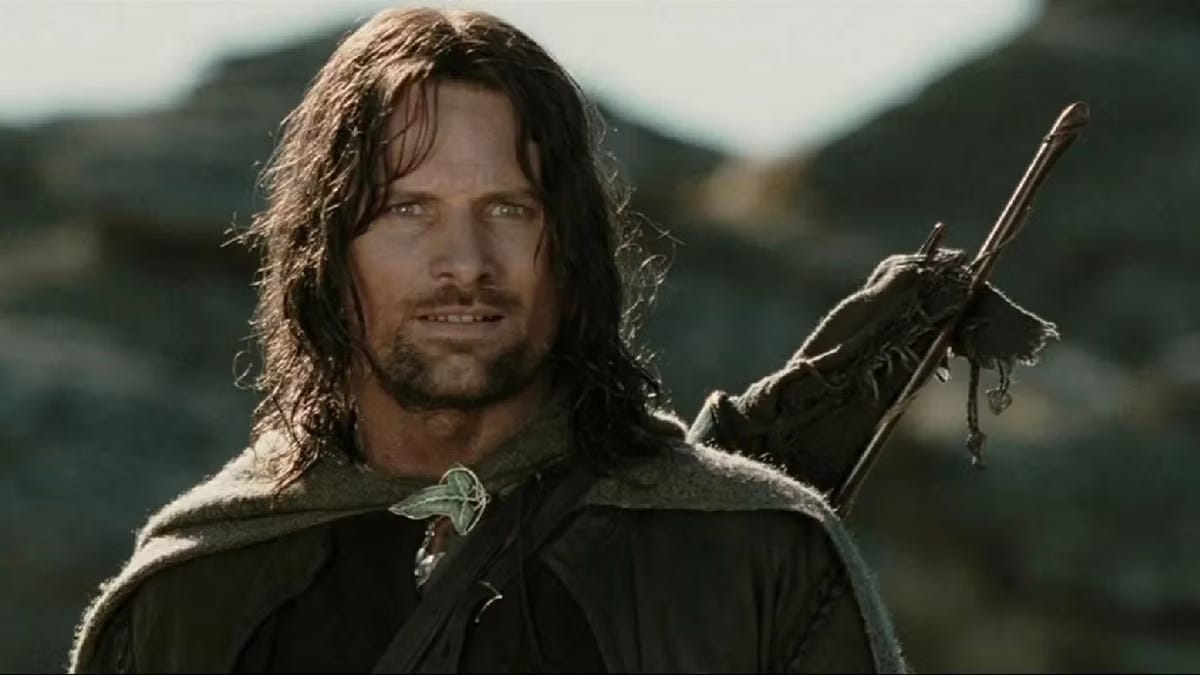
Aragorn possesses the same courage and strength, yet his character unfolds very differently. His bravery is not self‑serving but ordered toward the good of others. He does not seek power in order to shape his own identity. He restrains his strength, accepts his limits, and spends his life protecting what is good.
Aragorn represents another possibility for men.
The question is how such a man is formed.
The answer we see in The Lord of the Rings is that Aragorn did not appear by accident.
He was shaped by a tradition.
A brotherhood.
A thousand years of memory.
He was formed among the Rangers of the North — the hidden descendants of the ancient kings — a people Tolkien calls the Men of the West.
The name itself reveals their identity: Dûn = West and Edain = Men.
To understand Aragorn we must understand the people who formed him.
And to understand them we must first understand the meaning of the West itself.
The Meaning of the West
In Tolkien’s imagination the West is not merely a direction on a map. It is the memory that life comes from beyond us and must therefore be received rather than seized.
Geographically, the West points toward Aman and the Undying Lands — the dwelling place of the Valar and the lingering light of the original harmony of creation. Throughout Tolkien’s histories the greatest civilizations of men are those that remember and remain oriented toward that source.
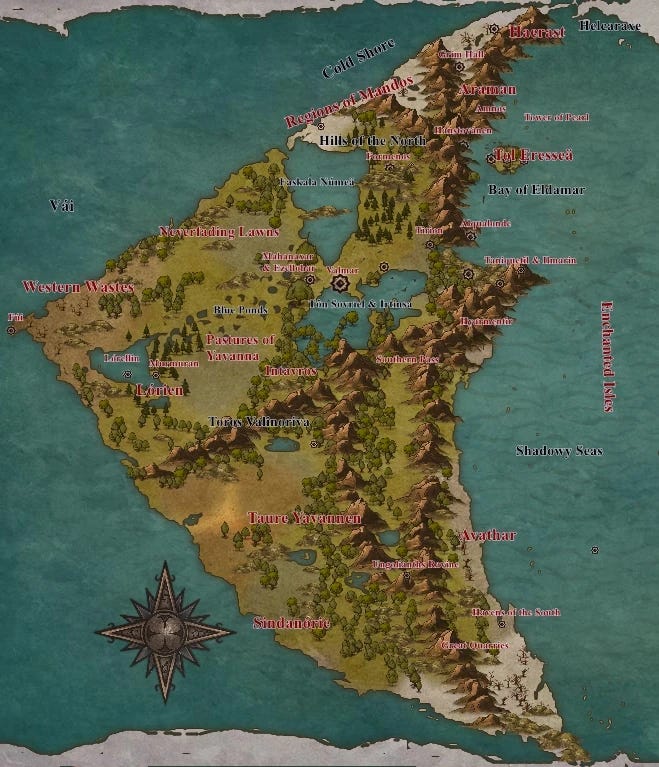
The Númenóreans embodied this orientation most clearly. In their early history they would ascend the mountain of Meneltarma and turn toward the West in reverence, remembering the authority of the Creator— Eru Illúvatar (The One Father of All) and the guardianship of the Valar (angelic beings who governed). Their civilization was built on the recognition that life was a gift.
To live westward is therefore to remember the source of life and to live within the limits of creatureliness.
Tolkien repeatedly shows that when civilizations forget this orientation they begin to decay. In The Silmarillion the fall of Númenor is described by saying that the memory of the West faded from their hearts. When that memory fades, the moral compass of a people fades with it.
Opposed to the West is another direction Tolkien uses throughout his stories: the East.
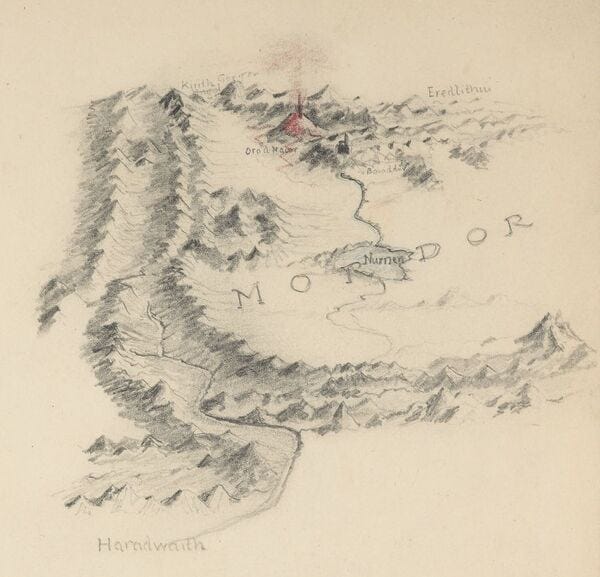
The East is not simply geography. It becomes the direction from which the Shadow of evil spreads. Mordor lies to the East of Gondor, and throughout The Lord of the Rings characters speak of “the Shadow in the East” as the power of Sauron rising again.
In Tolkien’s symbolic geography the contrast becomes clear. The West represents humility, memory, stewardship, and trust. The East represents domination — the attempt to take and control life rather than receive it as a gift.
This is the deeper nature of evil in Middle‑earth. Evil does not begin with violence. It begins with disordered desire: envy of what another has been given, pride in one’s own strength, and the growing belief that one deserves more than one has received. From there it matures into greed, rivalry, and self‑aggrandizement — the need to secure identity, power, or immortality through one’s own grasping. By the time evil reaches its full expression it becomes domination: the will to bend reality and other people to one’s own purposes instead of living within the order given by Eru (God).
Evil rarely conquers by strength alone. In the long history of Middle-earth it seeks to enlist men by first awakening their need and then deceiving them about how that need can be satisfied. This temptation finds its most fertile ground among men because their lives are short and their fear of death runs deep. Elves do not fear the loss of time in the same way, and dwarves are famously stubborn against domination. But men often feel the pressure of their mortality and the urgency to secure their place in the world before their time runs out. Power is therefore offered to those who fear weakness. Wealth is offered to those who envy others. And immortality is promised to those who fear death.
And so men slowly turn eastward.
The Fall of the Northern Kingdom
The kingdoms of the North began facing West.
After the fall of Númenor, Elendil and his sons Isildur and Anárion carried the memory of the West into Middle‑earth. From that memory they founded the realms of Arnor in the North and Gondor in the South. These kingdoms were built on the belief that authority was not something to seize but something entrusted by Eru.
For a time the realms of men flourished.
Yet even among the faithful the weakness of men remained.
At the end of the Second Age Sauron was defeated, and Isildur took the One Ring from his hand. But the Ring was not destroyed. Not long after, Isildur was slain at the Disaster of the Gladden Fields and the Ring was lost.
With the death of the High King the unity of the northern and southern kingdoms was broken.
Over the centuries Arnor weakened. Its authority fractured. Its strength diminished. What had once been a great kingdom slowly became vulnerable.
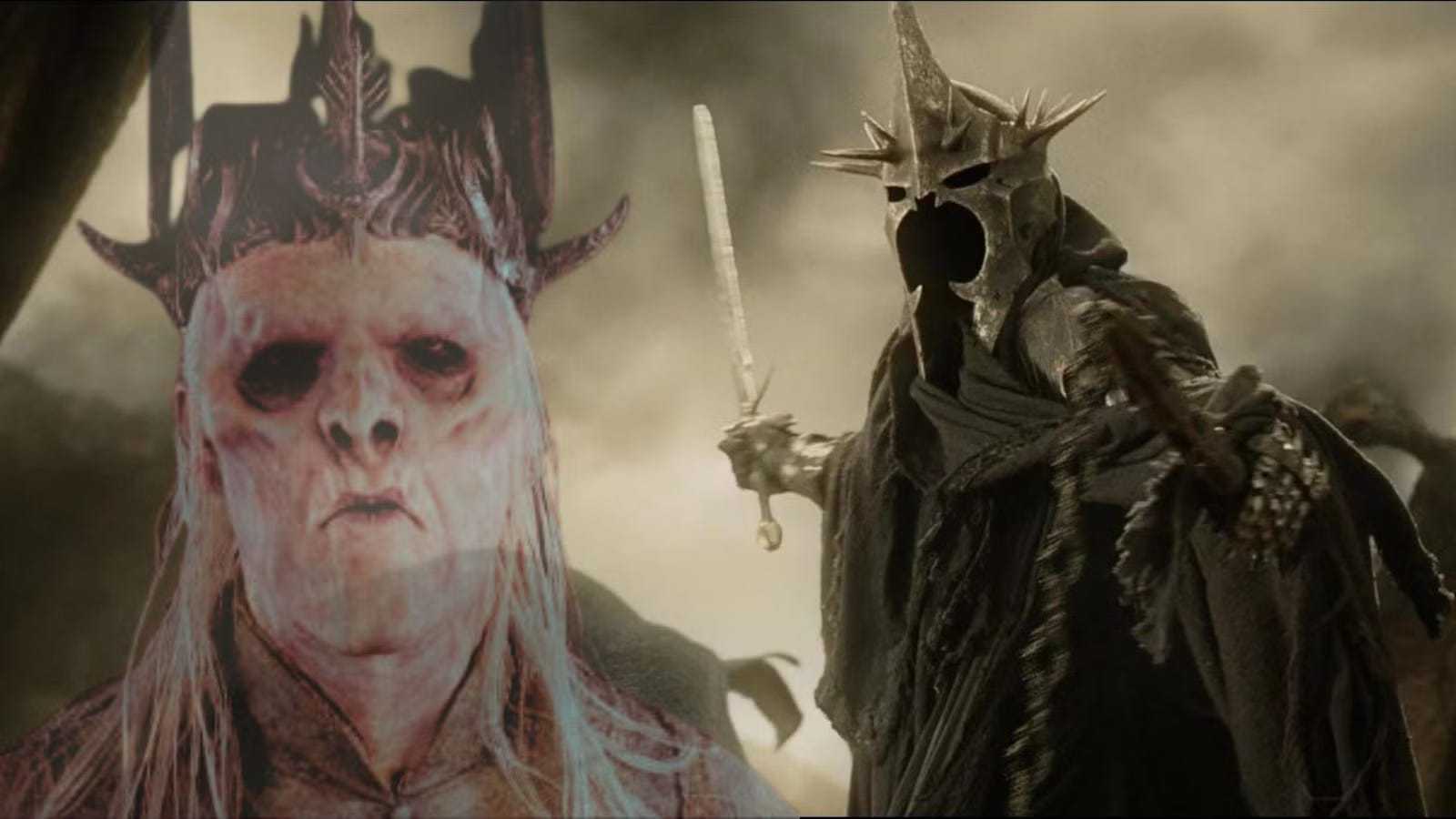
In time the Witch‑king of Angmar began his long war against the North. Across generations he dismantled the remaining strength of Arnor until the kingdom itself disappeared from the map.
The kingdom had fallen.
But the memory had not.
The Memory of the Ancient Kings
Tolkien writes of the Rangers of the North:
“They became a secret and wandering people, and they were few; but they preserved the memory of the ancient kings and the wisdom of the West.”
— J.R.R. Tolkien, The Lord of the Rings, Appendix A, “The North-kingdom and the Dúnedain.”
This line describes what became of the people of Arnor after their kingdom finally fell. The royal line did not disappear, but it changed. Arvedui was the last king of the North, and after his death his son Aranarth did not take up the crown. Instead he became the first Chieftain of the Dúnedain. The kingship ended, and the descendants of the ancient kings lived quietly as leaders of a scattered people.
The kingdom had become a clan.
A line of kings became a line of chieftains.
Instead of investing their trust in crowns or thrones, they gave their hearts to something more enduring.
They preserved the memory of the ancient kings.
But the memory Tolkien describes is not nostalgia for a lost civilization. It is remembering the beliefs that made those civilizations possible in the first place.
The ancient kings preserved a memory that had been purchased through failure.
They remembered the pride of Númenor, the temptation of domination, and the destruction that follows when men grasp for power that was meant to be held in trust.
Because of this memory the Dúnedain became a different kind of people. Their kingship was humbled into service. They lived quietly, guarding roads and villages that no longer knew their names.
For nearly a thousand years this life of hidden vigilance refined them. Pride was slowly sifted out through hardship. Virtues were sharpened through discipline and watchfulness. Their loyalty to the good became clearer, and the shadow that had once corrupted their ancestors was resisted.
They became a people shaped by humility, restraint, and long memory.
“The ancient kings preserved a memory that had been purchased through failure”
The Exhaustion of the Eastward Life
For many men the eastward life eventually becomes exhausting.
Men feel burdened by the constant pressure to secure their own existence.
The eastward life teaches men that everything depends on them — their identity, their security, their success, their reputation. They must build their own future, prove their own worth, and protect their own status.
At first this promise feels like strength.
But over time it produces something else.
Exhaustion.
The man who must sustain himself eventually discovers that the weight of existence is heavier than he expected.
Greed.
Because the eastward life never provides enough security, a man begins to grasp for more. More wealth, more influence, more control.
Status.
A man begins to measure himself against others, constantly comparing, competing, and protecting his place in the hierarchy.
The sacrifices he is required to make on the altar of strength slowly hollow him out.
This is the doom of the Men of the East.
Blessed Are the Men Who Are Not Gods
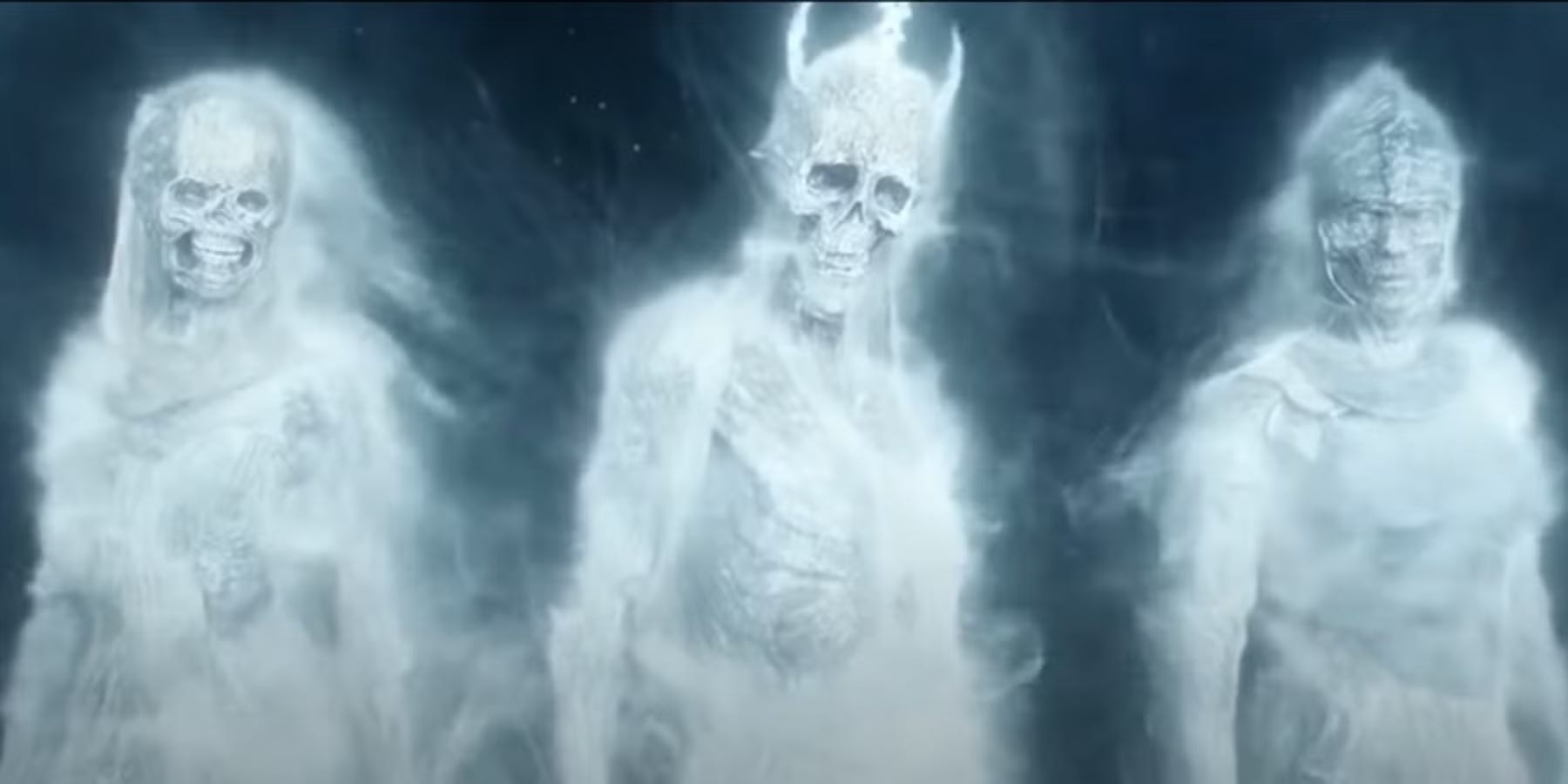
When the eastward life collapses — and it always does — the ruin it achieves becomes a turning point. A man can cling to his hunger and become hollow and enslaved like a wraith, or he may awake in his ruin, and see in himself the blessed weakness Christ describes in the Beatitudes.
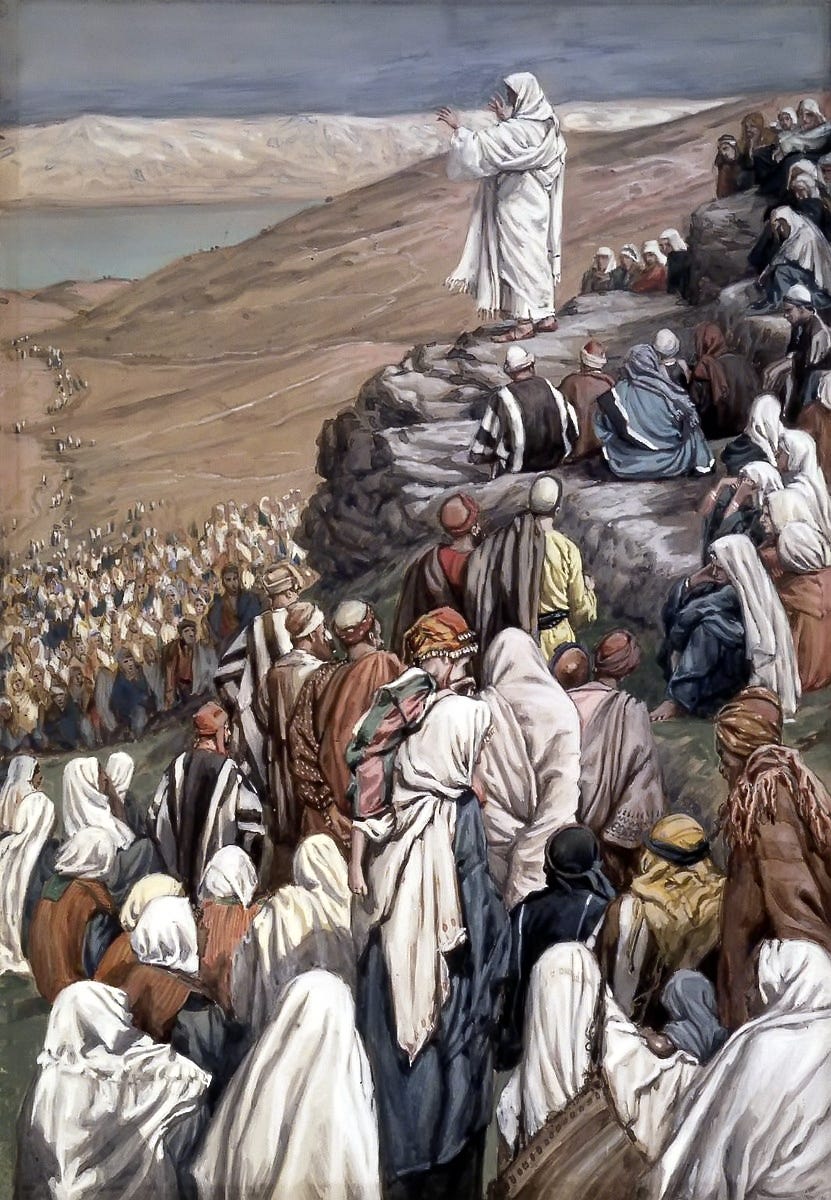
“Blessed are the poor in spirit, for theirs is the kingdom of heaven.
Blessed are those who mourn, for they shall be comforted.
Blessed are the meek, for they shall inherit the earth.
Blessed are those who hunger and thirst for righteousness, for they shall be satisfied.”
— The Gospel of Matthew 5:3-5
Blessed are the poor in spirit who realize they cannot sustain themselves.
Blessed are those who mourn the brokenness that evil has done to their own hearts, to those around them, and to the world.
Blessed are the meek who have abandoned the illusion that domination can heal what is broken.
Blessed are those who hunger and thirst for righteousness because they have discovered that looking east to evil cannot achieve the goodness they long for.
Men like this are not blessed because they are strong. They are blessed because they have finally discovered that they are not God.
And when a man reaches that place, the offer of life and life abundantly, awaits him in the face of The One who is God.
If he would just turn and Remember The West.
Trust and the Men of the West
Remembering the West is ultimately a life of faith.
To remember the West is to remember that life comes from beyond us — from The One — and that we are creatures rather than masters of the world. In biblical language this remembering is called faith. And faith, at its heart, means trust.
Westwardness then begins with trust.
Without trust, virtues can easily become things we grasp after in our own strength. Courage becomes bravado. Discipline becomes pride. Leadership becomes control. Even goodness becomes another attempt to prove our worth.
But when trust is present these virtues grow naturally and authentically.
Trust moves a man out of the center of his own life.
It frees him from the self‑obsession of self‑actualization so that he can actually cultivate the virtues we associate with masculine strength.
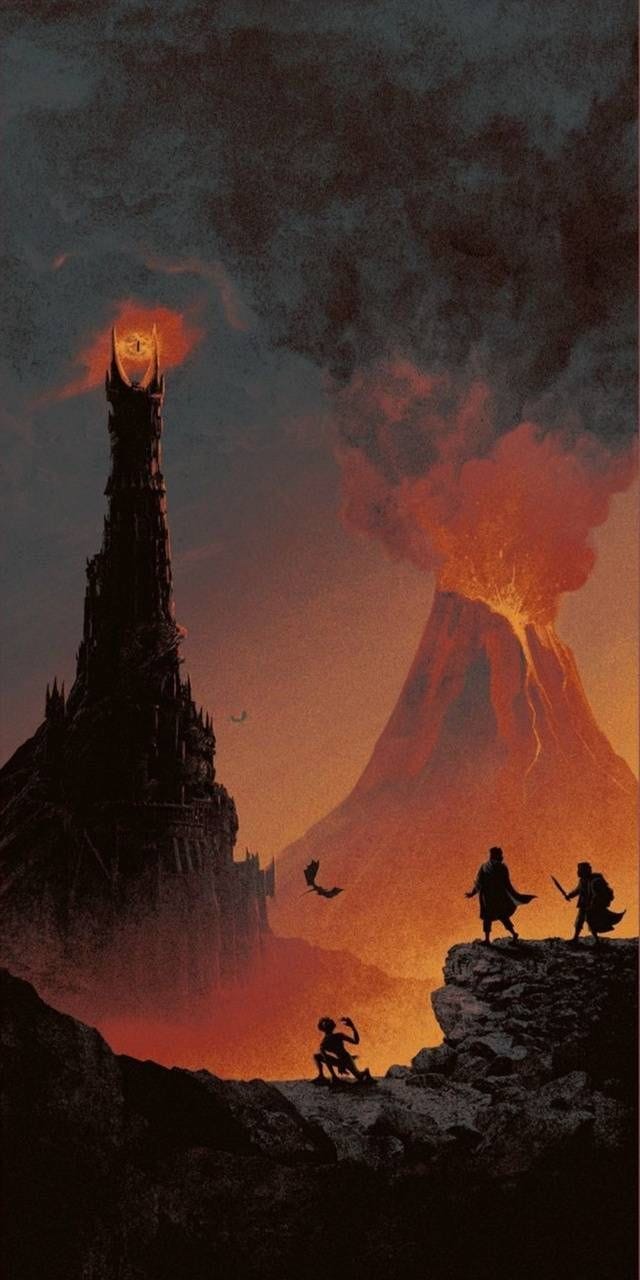
Without trust a man remains the center of everything. He becomes the means by which every problem must be solved, the hope of every situation, the hand of strength, and the final authority. This posture is the essence of the evil of the East.
Of Mordor.
Trust cures this corruption by restoring the One generous Creator to the center of reality. When God stands at the center, strength becomes protection for the good of others. Authority becomes service. Men learn to guard the dignity and beauty of the world — something he cannot even see if he is staring constantly at himself. Love, faithful tending, and self‑sacrifice become possible.
None of these virtues can grow in the life of a man who remains at the center of his own story. As long as a man trusts only in his own strength he will drift further eastward into the desperate cycle of needing more and more power.
This is why the eastward archetype in Tolkien’s story is the Witch‑king of Angmar — a ring‑wraith. Hollowed out. No longer truly a man. Only a spiritually vacuous hole.
The Rangers of the North cultivate a different kind of life. Over generations they nurture a goodness in their hearts and in the realm that can only be born of trust.
Trust becomes the footing on which the life of the Men of the West stands.
The Brotherhood That Remembers
But no man becomes a Man of the West alone.
A man of the West is not self-made. The entire history of the Dúnedain shows that this way of life is preserved within a people.
Even after their kingdom fell, the Rangers of the North preserved the memory of the West together. They reminded one another who they were, whose they were, and what they served.
Such remembrance requires brotherhood.
There are seasons when a man’s trust falters. When exhaustion returns. When the temptation of the East whispers again that domination would be easier than faithfulness. In those moments the faith of a brotherhood carries what a single man cannot.
Brothers believe for one another when belief becomes difficult. They remind one another when memory begins to fade. They embody goodness toward one another as an expression of the love of God itself.
This is why the Rangers endured. Their strength was not merely individual virtue but shared memory.
Together they kept the West alive in their hearts.
Taking the Grey Cloak
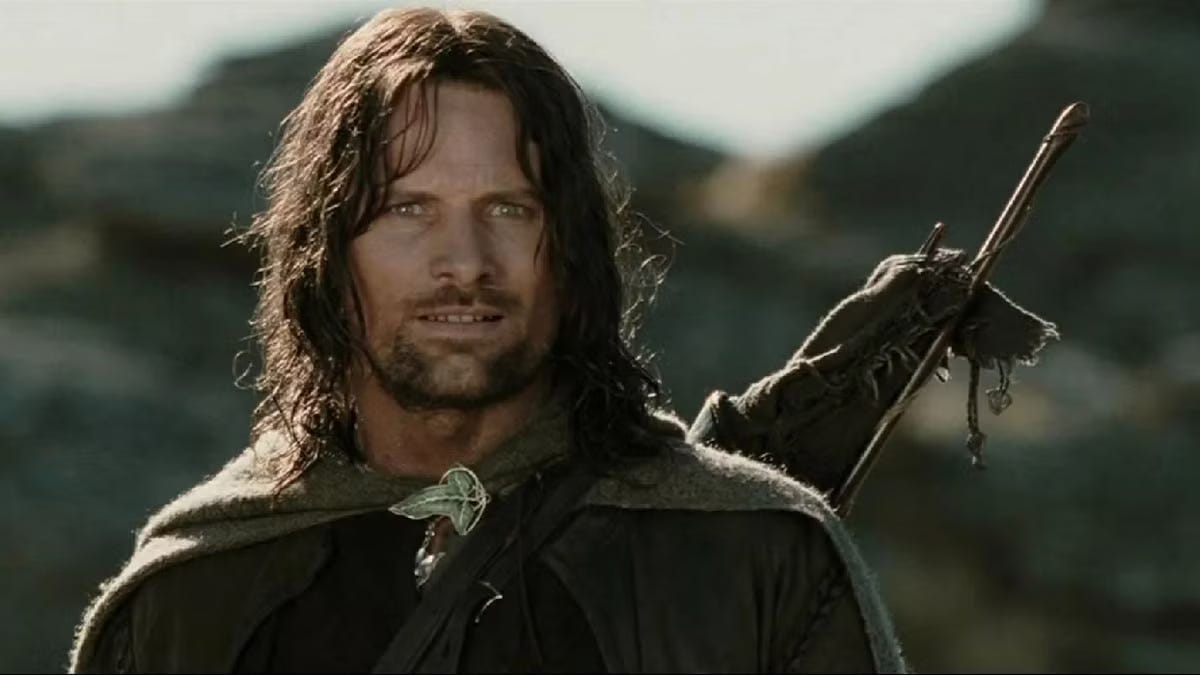
The Rangers did not wear the black of the East.
Nor did they wear the gold of kings.
They wore grey (and green) cloaks.
Grey marked a season of formation near to the earth.
Gold is not evil, nor is armor wrong. Kings will one day return, and there will be moments when strength must stand openly in the light. But the age of the Dúnedain was not yet that moment. Their calling was not triumph but preparation.
For nearly a thousand years they lived in a long season of formation — a quiet discipline of heart and soul. Their task was not to rebuild the kingdom with stone but to rebuild the character that had once sustained it.
This is why the Grey Cloak mattered.
To take it upon oneself was to enter a life of long obedience to trust. It was a commitment to keep remembering the West when the world had forgotten it.
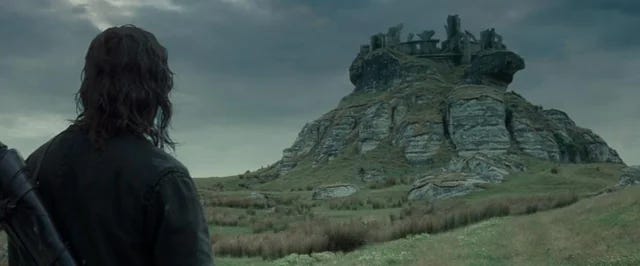
One can imagine the Rangers wandering the empty lands of the North, passing the ruins of the cities their fathers had once built. Towers broken. Roads overgrown. Kingdoms turned to dust.
But the Dúnedain did not rebuild those ruins with stone.
Instead they rebuilt the kingdom within themselves — stone by stone in the formation of trust by way of memory.
Every Man Becomes What He Faces
The Beatitudes describe the heart of a Man of the West.
The Grey Cloak describes the life he chooses to live.
For nearly a thousand years the Rangers of the North carried this way of life in obscurity — remembering, believing, and hoping.
From that hidden brotherhood Aragorn emerged.
His virtues and gravity were not an accident of personality. They were the fruit of generations who had learned to face West and trust in it.
And when the hour finally came, it was this kind of man and the Grey Company who came at his call, who could walk into the darkness, challenge the power of Mordor, and serve to restore the realms of men.
The king returned because the memory had endured.
If this is true
What have you quietly set aside—not because it was false, but because it asked something of you?
Where have you let your vision narrow to what is immediate, instead of what endures?
What would it look like to recover that, and order your life around it again?
This could have taken a very dark turn, honestly, given how so many people try to use Tolkien to support a very racist, blood-and-soil nationalist type of politics. But you went in a very different direction, showing how the West is important not because of the skin color of the people who lived there, but rather because in the old world before the Fall of Numenor, it was the closest to Valinor, Heaven on earth. Well done 😊
Wonderful. Thank you! The more I think about Tolkien’s works, the more gold I find there, waiting to be uncovered.